Shortwave Radio in Australia — Why It Still Matters When Everything Else Fails

For most Australians, everyday communication happens through mobile networks, Wi-Fi, and streaming platforms. It’s easy to assume we’ll always be connected — until a storm knocks out power, a bushfire burns through infrastructure, or the internet simply goes down. Australia is a vast country with harsh environments, remote communities, and long distances between towns.

That’s why Shortwave (SW) radio is still one of the most reliable forms of long-distance communication and emergency information — especially when modern systems fail.

Whether you live in the outback, travel remote regions, or want to be prepared for emergencies, SW radio is a tool worth having.

What is Shortwave Radio?

Shortwave (SW) uses radio frequencies roughly between 1.6–30 MHz, capable of bouncing off the Earth’s ionosphere and travelling across entire continents. Unlike FM radio — which is limited by line-of-sight — shortwave signals can travel thousands of kilometres, across oceans and remote landscapes.

In Australia, that means with a small radio you can pick up broadcasts from across the country, the Pacific region, and even the rest of the world.

No internet.
No mobile towers.
Just radio and the atmosphere.

How Shortwave Works — The Simple Version

Shortwave signals travel upward, bounce off the ionosphere, then return to Earth — sometimes several times. This skip effect allows signals to travel incredible distances.

Daytime and night-time conditions affect reception, and solar activity plays a role too. Part of the experience is tuning, listening, adapting — and then suddenly hearing a station from Japan, Indonesia, or Europe right from your backyard.

It’s a reminder of how connected the world is, even without modern tech.

Why Shortwave Radio Is Important in Australia

Australia is uniquely suited to benefit from SW radio — we have vast land, remote settlements, and weather that can turn quickly. Here’s why it’s valuable:

🔥 1. Works When Mobile & Internet Fails

Cyclones, bushfires, floods — we’ve all seen how quickly communication infrastructure can go down. Shortwave operates independently, making it one of the most resilient sources of information during a crisis.

🌏 2. Receive News Beyond Australia

If local communications are interrupted, you can still get international news, government broadcasts, and emergency updates from other countries — no censorship, no reliance on third-party systems.

🚙 3. Ideal for Remote & Off-Grid Australia

Travelling the Stuart Highway, camping in Cape York, working on a station in the NT — many areas outside major cities still experience patchy coverage. SW radio doesn’t care where you are.

🦘 4. Critical for Survival & Preparedness

In a grid-down scenario, communication becomes lifeline. Shortwave lets you hear weather updates, incoming storm warnings, geopolitical events, and emergency alerts when nothing else works.

📻 5. Low-Power, Portable & Affordable

Most shortwave radios run on batteries, solar, hand-cranks, or even kinetic power. You can throw one in a 4WD, a bug-out bag, a caravan or cyclone kit — and it will still work without the grid.

Why Every Aussie Should Have a Shortwave Radio

Shortwave radio is a simple safety net. You don’t need a licence to listen. You don’t need infrastructure to support it. You don’t need to rely on a corporation or government server staying online.

It’s independence.
It’s resilience.
It’s peace of mind — especially in a country where nature is powerful and unpredictable.

Getting Started with Shortwave Listening in Australia

If you’re considering buying one, look for:

✔ Coverage of 1.6–30 MHz
✔ Optional SSB (Single Side Band) for amateur long-distance comms
✔ Solar / hand-crank models for emergency readiness
✔ A portable antenna for better reception in remote areas
✔ Spare batteries stored with the radio

Try listening at different times of day — shortwave comes alive after dark in Australia, often pulling in transmissions from all over the Southern Hemisphere.

Why You Should Learn Morse Code—It Could Save Your Life

When most people hear the term Morse Code, they think of old war movies or ancient telegraph operators tapping away on brass keys. But Morse Code is more than a relic of history—it’s a survival skill that could one day save your life.

A Language Beyond Technology

Unlike texting, phone calls, or emails, Morse Code doesn’t require electricity, internet, or even modern tools. All you need is a way to create sound, light, or signals. That could mean tapping on a wall, flashing a flashlight, or banging two rocks together. In survival scenarios, this kind of low-tech communication could be priceless.

When Words Aren’t Possible

Imagine you’re trapped, injured, or unable to speak. With Morse Code, you could signal for help using simple patterns. Even three short taps, three long taps, and three short taps—the famous SOS—could alert rescuers to your location. It’s a universal cry for help that transcends language barriers.

A Global Survival Language

If society collapsed tomorrow and digital communication failed, Morse Code would still work. It’s easy to learn, requires no special equipment, and has been understood worldwide for over 150 years. That makes it one of the few “languages” nearly everyone could potentially recognize.

Training Your Brain for Survival

Learning Morse isn’t just about safety—it also sharpens your memory, focus, and problem-solving skills. Just a few minutes a day practicing dots and dashes can keep your mind sharp while giving you a skill that might one day save your life.

A Simple First Step

You don’t have to memorize the entire alphabet right away. Start small:

  • Learn SOS (··· ––– ···).

  • Practice your name in Morse.

  • Try sending short signals with a flashlight at night.

These small steps could make a big difference in an emergency.

The modern world makes us feel invincible with smartphones, satellites, and Wi-Fi everywhere. But history shows how fragile that system can be. Morse Code is a timeless backup plan—a lifeline when everything else fails.

Learn it now. Your life could depend on it.

PREP READY 3D Printed Morse Code Wallet Cheat Sheet Ai 1
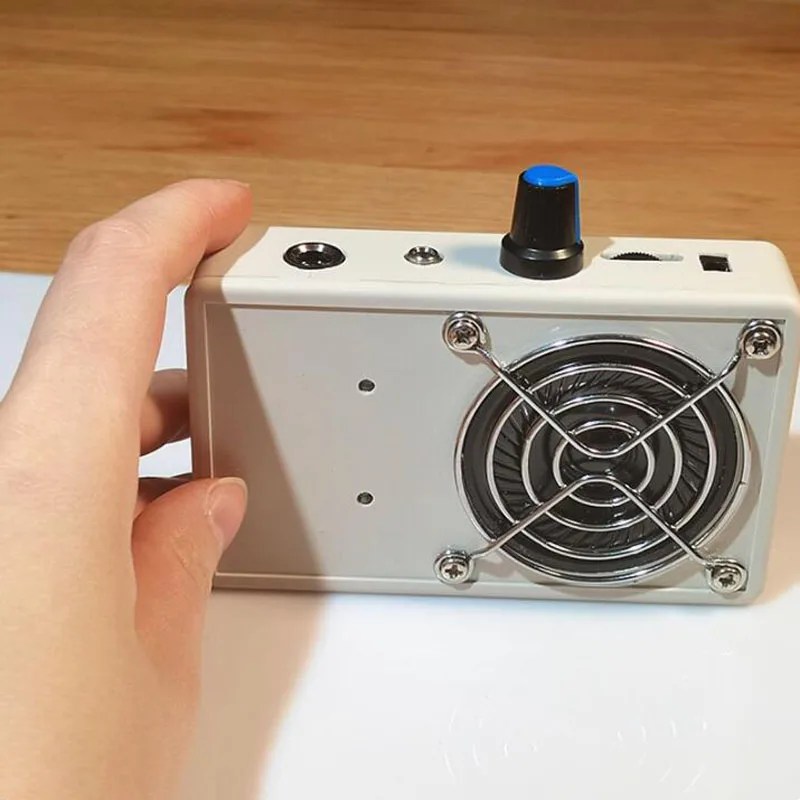
Moores Code Learning Practice Oscillato 1

Survival by Design: How 3D Printing Can Save Your Life in a Crisis

Survival by Design: How 3D Printing Can Save Your Life in a Crisis

In a world where self-reliance is becoming increasingly vital, 3D printing is stepping into the spotlight as a revolutionary tool for survivalists and preppers. Whether you’re off-grid, facing a supply shortage, or in a disaster zone, a portable 3D printer and a spool of filament could become your most valuable survival gear.

Why 3D Printing Matters in a Survival Situation

At its core, 3D printing gives you the ability to manufacture essential tools and parts on demand. It can eliminate dependency on traditional supply chains, which are often disrupted during natural disasters, economic collapse, or grid failures. With digital files and a reliable printer, you’re essentially carrying a virtual toolbox of life-saving items.

Top Survival Items You Can 3D Print

Here are just a few examples of what you can produce in the field with a 3D printer:

1. Water Filtration Parts

From gravity-fed filter housings to replacement connectors for existing systems, you can print critical components that help you stay hydrated and safe from waterborne illnesses.

2. Cooking and Fire Tools

Lightweight portable stoves, fire starters, or pot holders—these can all be printed in durable, high-temperature materials. If you’re using solar cookers, you can even 3D print mirror brackets or adjustment arms.

3. Medical Supplies

In an emergency, printed splints, tourniquet parts, or even tweezers and scalpel handles can mean the difference between life and death. While some components may still require sterilization or metal parts, 3D printing fills in the gaps when conventional medical kits run out.

4. Hardware and Repair Parts

Need a missing bolt, a custom gear, or a broken clip replaced? Print it. From tent pole connectors to flashlight mounts, having a printer lets you adapt and repair equipment on the fly.

5. Traps and Fishing Gear

You can print small animal traps, fish hooks, line winders, and even slingshot ammo. This expands your ability to find food in the wild without bulky gear.

What You Need to Get Started

  • Portable 3D Printer (like the Prusa Mini or Creality Ender-3)

  • Filament (PETG or ABS for outdoor durability)

  • Power Supply (solar, battery bank, or generator)

  • Digital STL Files (stored offline on a USB or SD card)

3D printing isn’t just a maker’s hobby—it’s a life-saving skill. In a survival scenario, it transforms from a tool of convenience to a tool of resilience. By mastering 3D design and printing, you’re not just preparing for the future—you’re printing it.

Check our our free print at home designs https://makerworld.com

Survival By Design 2
Survival By Design 3

Why a Two-Way or Ham Radio Is Essential in a Survival or Bug-Out Situation

In a world where we’re used to instant communication via smartphones and internet, it’s easy to overlook just how fragile our modern communication networks are. In a survival situation—whether caused by natural disasters, grid failures, civil unrest, or a full-blown bug-out scenario—those networks can go down in an instant. When that happens, a two-way radio or ham radio isn’t just a convenience—it can be a lifesaver.

1. When Cell Towers Go Down, Radios Still Work

Cell phone networks depend on a web of infrastructure: towers, fiber optics, and power grids. In a disaster, any part of that system can fail. But two-way radios and ham radios don’t rely on that grid. They use radio waves to send and receive information directly from one unit to another (in the case of two-way radios), or via repeaters and long-distance frequencies (in the case of ham radios). This independence makes them one of the most reliable forms of communication during a crisis.

2. Real-Time Communication Without the Internet

In a bug-out situation, time is critical. You may need to coordinate with family members, alert others to threats, or call for help. Radios offer instant, voice-based communication without the need for Wi-Fi, apps, or cell signal. You press a button and speak—no waiting for texts to go through or buffering during a call.

3. Ham Radios Have Incredible Range

While simple two-way radios (like FRS/GMRS) are great for short-range communication, ham radios can connect you with people miles—or even hundreds of miles—away. With the right setup and license, you can reach across the country or even the globe. This kind of reach can be vital for getting updated news, weather alerts, or making contact when stranded in remote locations.

4. Stay Informed With Emergency Broadcasts

Many ham radios can receive NOAA weather alerts, emergency broadcasts, and public service announcements. This makes them a critical tool for staying informed about evolving situations—like incoming storms, evacuation orders, or other hazards—especially when internet or TV isn’t an option.

5. Community and Support Networks

Ham radio isn’t just about gear—it’s about community. Across the world, licensed ham operators form a decentralized, volunteer-based communication network that activates in times of crisis. During hurricanes, earthquakes, or blackouts, ham radio operators have been the first to relay messages between affected zones and emergency responders. In a long-term survival scenario, these networks can offer guidance, supplies, and morale.

6. They’re Durable, Portable, and Dependable

Survival situations demand rugged gear. Radios like the Baofeng UV-5R or Motorola Talkabouts are built to withstand the elements. They’re small enough to fit in a bug-out bag and can operate for days on a single charge, especially if you have solar charging options. Unlike a phone, you won’t be searching for a Wi-Fi signal or waiting for an app update—you’re always ready.

7. You Control the Channel

With radios, you choose the frequency. This allows for private, group, or emergency channels that can’t be easily monitored or jammed by outsiders (especially when using encrypted digital radios or smart frequency management). In a tense or hostile situation, communication security can mean the difference between safety and exposure.


Final Thoughts

In any true survival or bug-out scenario, communication becomes one of your top priorities—right up there with food, water, and shelter. A two-way or ham radio offers more than just a line of contact—it provides information, coordination, and peace of mind.

Whether you’re prepping for a major disaster or simply preparing for a remote camping trip, having a reliable radio and knowing how to use it could be the best decision you ever make.

Two Way Radio

How 3D Printing Could Save Our Lives in the Future

The world has seen its fair share of challenges in recent years: supply chain disruptions, natural disasters, and global pandemics, to name a few. These events have highlighted vulnerabilities in the systems we rely on for everyday necessities. Enter 3D printing, a groundbreaking technology with the potential to revolutionize how we respond to shortages and emergencies. In this blog post, we’ll explore how 3D-printing could become a lifesaving solution in the future.

Addressing Supply Chain Shortages

One of the most immediate benefits of 3D-printing is its ability to produce items on demand. Unlike traditional manufacturing, which relies on large-scale factories and complex supply chains, 3D printing allows individuals and businesses to create objects locally. This capability becomes crucial during crises when supply chains are disrupted, leading to empty shelves in stores.

Imagine a natural disaster cutting off access to essential supplies like medical equipment, tools, or household goods. With a 3D printer and the right materials, communities could produce these items on-site, reducing dependency on external suppliers. For example, during the COVID-19 pandemic, 3D printing was used to manufacture face shields, ventilator components, and other critical medical supplies when traditional sources were overwhelmed.

Customization for Critical Needs

Another advantage of 3D-printing is its ability to produce customized solutions. In emergencies, one size doesn’t always fit all. Whether it’s a specialized medical device, a unique spare part for a broken machine, or a custom tool for rescue operations, 3D printing can quickly adapt to specific requirements.

This flexibility extends beyond emergencies. In remote or underdeveloped areas, where infrastructure for manufacturing is limited, 3D printing can provide access to items that would otherwise be impossible to obtain. A simple internet connection to download designs and a supply of raw materials can turn a 3D printer into a lifeline.

Sustainability and Resource Efficiency

Traditional manufacturing often leads to waste, with excess materials discarded during production. 3D printing, on the other hand, is an additive process that builds objects layer by layer, using only the necessary amount of material. This efficiency not only reduces waste but also makes 3D printing an environmentally friendly alternative.

During times of scarcity, such as a global resource shortage, this efficiency could prove vital. For instance, instead of importing goods made from limited resources, local communities could recycle existing materials into new products via 3D printing. This capability could help reduce dependency on global supply chains and foster greater self-sufficiency.

A Vision for the Future

As 3D printing technology advances, its applications are expanding. Future developments may include bioprinting human tissue for medical emergencies, printing food to address hunger crises, or creating shelters for disaster victims. These possibilities highlight the transformative potential of 3D printing to address critical challenges and improve resilience in the face of adversity.

The key to unlocking this potential lies in making 3D printing more accessible. As printers become more affordable and user-friendly, and as materials and design libraries become more widely available, the technology could become a staple in homes, schools, and community centers worldwide.

Conclusion

3D printing represents more than just a technological innovation; it’s a tool for empowerment. By enabling people to create what they need, when they need it, this technology could redefine how we respond to shortages and emergencies. In a future where challenges are inevitable, 3D printing offers a lifeline—a way to adapt, survive, and thrive.

So, the next time you hear about 3D printing, think beyond trinkets and prototypes. Think about its potential to save lives, sustain communities, and build a more resilient world.

A person at home using a modern 3D printer to create a useful item such as a tool or a household object. The setting is a cozy home workspace with t
A futuristic scene depicting a 3D printer in action printing essential supplies such as medical equipment and tools. The setting is a modern home or
A futuristic vision of 3D printing showcasing an advanced and sleek 3D printer in a high tech environment. The scene includes multiple 3D printers wo

The Survivalist’s Edge: Rechargeable Batteries vs. Disposable Batteries

In the world of survivalism and bug-out planning, every piece of gear in your pack should earn its keep. Batteries are no exception. Whether powering flashlights, radios, GPS devices, or other essential electronics, batteries can be the difference between life and death in an emergency. This begs the question: should you stock up on disposable batteries or invest in rechargeables?

Let’s dive into the benefits of rechargeable batteries versus their disposable counterparts, with a focus on survival and preparedness.

The Basics: Disposable vs. Rechargeable Batteries

Disposable batteries (alkaline or lithium primary cells) are single-use. Once depleted, they’re destined for the trash or recycling bin. Rechargeable batteries (NiMH, Li-ion, or similar chemistries) can be used repeatedly after charging with an appropriate charger.

For casual use, disposable batteries are often favored for their convenience. But when it comes to bug-out scenarios and long-term survival, rechargeable batteries outshine disposables in several critical ways.

1. Longevity and Cost Efficiency

Disposable Batteries:

  • Pros: Widely available and ready to use right out of the pack.
  • Cons: Deplete quickly under heavy use and become costly over time. A single flashlight or radio might require dozens of replacements over an extended period.

Rechargeable Batteries:

  • Pros: Each battery can be recharged hundreds or even thousands of times, significantly reducing long-term costs.
  • Cons: Initial investment in batteries and a charging system can be higher, but the savings accumulate rapidly with repeated use.

In a survival scenario, carrying dozens of disposable batteries is neither practical nor sustainable. A handful of rechargeables and a solar charger can keep your gear powered indefinitely.

2. Sustainability and Weight

Disposable Batteries:

  • Heavy and bulky in large quantities.
  • Generate waste that can become an environmental hazard.

Rechargeable Batteries:

  • Lighter load over time, as fewer batteries are needed.
  • Environmentally friendly due to reduced waste.

When packing a bug-out bag, weight and space are at a premium. Rechargeables are a smart choice for minimizing your pack’s load while maximizing utility.

3. Versatility with Solar Chargers

One of the most compelling reasons to choose rechargeable batteries is their compatibility with solar chargers. In a grid-down scenario, disposable batteries offer no way to replenish power once depleted. Rechargeables, on the other hand, can be paired with:

  • Solar battery chargers
  • Hand-crank generators
  • Portable power banks

With the sun as a limitless power source, rechargeables ensure that your critical devices remain operational no matter how long you’re off-grid.

4. Performance and Reliability

Disposable Batteries:

  • Pros: Ready to use with a long shelf life, often exceeding 5-10 years.
  • Cons: Decline in performance in extreme temperatures and high-drain devices.

Rechargeable Batteries:

  • Pros: Modern NiMH and Li-ion batteries perform well under a wide range of conditions. Many are specifically designed for high-drain electronics.
  • Cons: Some rechargeables lose charge over time if stored for long periods, but low self-discharge models like Eneloop batteries solve this issue.

Survivalist’s Gear Checklist: Leveraging Rechargeables

Here’s how to make the most of rechargeable batteries in your survival kit:

1. Stock High-Quality Batteries: Opt for brands like Eneloop (NiMH) or high-capacity Li-ion cells for durability and performance.

2. Invest in a Reliable Solar Charger: A portable solar panel with USB output can keep your batteries charged indefinitely.

3. Rotate Your Stock: Use and recharge your batteries periodically to ensure they remain in good condition.

4. Pair with Multi-Device Chargers: Multi-bay chargers allow you to recharge several batteries at once, saving time and ensuring all your gear stays powered.

When to Use Disposables

Despite their drawbacks, disposable batteries still have a place in survival planning. They’re ideal for:

  • Short-Term Emergencies: Keeping devices powered during brief outages.
  • Backup Power: Storing a pack of lithium disposables as a fail-safe when rechargeables are unavailable.
  • Extreme Cold Environments: Lithium disposables excel in freezing temperatures where other battery types may falter.

Conclusion: The Clear Winner for Survival

Rechargeable batteries are the logical choice for bug-out and survival scenarios. Their longevity, versatility, and compatibility with renewable energy sources like solar power make them indispensable for off-grid living. While disposable batteries can serve as a short-term backup, relying on them exclusively is neither practical nor sustainable.

Prepare wisely: invest in high-quality rechargeable batteries, a robust solar charger, and the knowledge to keep your gear operational. When the unexpected strikes, this edge can make all the difference.

Rechargeable Batteries 1
Rechargeable Batteries 2

0
    0
    Your Cart
    Your cart is emptyReturn to Shop